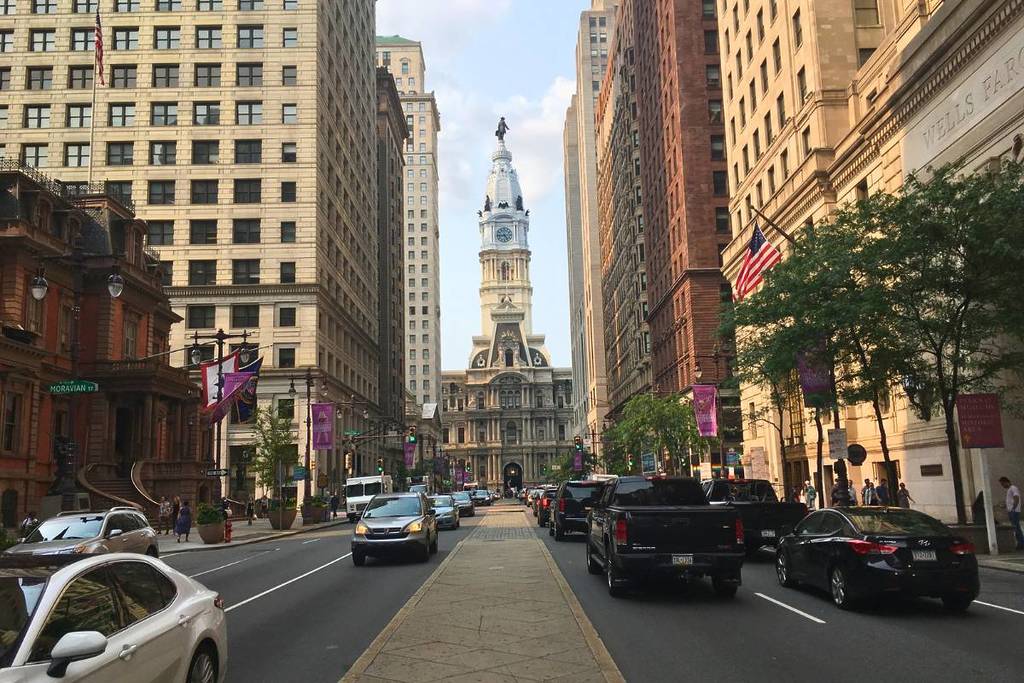
WalletHub just released its annual ranking of the 100 best and worst U.S. cities to drive in, and Philadelphia came in dead last. If you’ve ever circled Broad Street for parking or dodged a pothole the size of a kiddie pool, you know exactly why.
While 87% of Americans rely on cars for daily trips, Philly drivers face extra stress, extra costs, and extra honking.
In fact, the average U.S. driver spends 369 hours a year behind the wheel—more than 15 full days. Factor in gas, repairs, and traffic congestion, and that adds up to roughly $771 per driver annually. In Philly, it feels like you’re paying a little extra, in both time and patience.
🚗 Why Philly ranked the worst U.S. city to drive in
The WalletHub study used 30 metrics to rank driver-friendliness, including traffic, road quality, costs, and safety. Philly landed 100th overall—below New York, L.A., and D.C.
Key frustrations included:
- constant construction
- narrow streets
- steep parking rates
- a reputation for bold driving maneuvers (that scare even seasoned locals)
💪🏻 Why driving in Philly is a true test
Indeed, driving in Philly is a true test thanks to the roads, potholes, and aging infrastructure.
Part of the struggle is literal: Philly’s roads and bridges are aging, and many need major repairs.
Combine that with rush-hour congestion, frequent detours, and higher vehicle maintenance costs, and it’s easy to see why locals say driving here can feel like an extreme sport.
✨ But still…Philly pride wins every time
In some perfectly-Philly fashion, we persevere. We hop, honk, and hustle our way through traffic, and when we finally park, we celebrate with all the city has to offer.
Navigating the Philly streets while driving and swerving potholes or outsmarting PPA, has all become apart of our Philly love/hate language.
Undoubtedly, our streets may test us, but they also remind us: we’re a city that keeps on moving, no matter the potholes.
See the full ranking of the 100 best and worst U.S. cities to drive in on the map below: